

Monday

Monday 5th October




05.10.26
LC: To divide by 2-digit numbers with remainders



Deep within the Whispering Woods stood a crooked cottage, its windows glowing with an eerie green light. Twisted branches clawed at the sky, and thick mist curled between the ancient trees. Inside lived Eldric, a wizard who had spent over three hundred years studying magic. His long silver beard reached his waist, and his golden eyes seemed to see things ordinary people could not.
Every evening, Eldric stirred a bubbling potion in his enormous iron cauldron, whispering strange words from an ancient spellbook. Shadows danced across the walls, and tiny sparks of purple light floated through the air.
One stormy evening, three sharp knocks echoed through the cottage. Eldric froze. Nobody had visited him for years, and he preferred it that way.
“Who seeks Eldric of the Whispering Woods?” he called, gripping his wooden staff.
A small girl in a muddy blue cloak stood at the door. “Please, you must help us,” she whispered. “A terrible shadow has appeared above our village. The river has turned black, and our crops are dying.”
At the mention of the shadow, Eldric’s face turned pale. Long ago, he had helped imprison a powerful creature beneath the mountains. He had believed it would never escape.
He rushed to his shelves and pulled down a thick, leather-bound book.
“Then we have very little time,” he murmured.
For the first time in three hundred years, the old wizard was afraid.
1. Retrieval: What two problems had affected the girl’s village?
2. Inference: Why does Eldric become frightened when the girl describes the shadow? Use evidence from the text.
3. Author’s Choice of Language: What does the phrase “Twisted branches clawed at the sky” suggest about the forest? Explain the effect on the reader.
Monday 5th October
LC: To summarise information
Why Do Bees Matter?
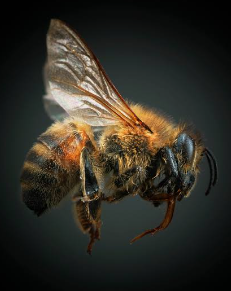
Bees are small insects, but they play a very important role in our world. There are thousands of different types of bees, and they can be found in many different habitats. When bees visit flowers, they collect a powder called pollen. As they move from flower to flower, some of this pollen is transferred between plants. This process is called pollination.
Pollination helps plants produce fruits and seeds. Many of the foods people eat, such as apples, strawberries, beans and some nuts, depend on pollinators such as bees. Without enough pollinators, farmers could find it much harder to grow certain crops.
However, bees face several challenges. The places where they live are sometimes destroyed to make room for buildings, roads and farmland. Pesticides can also harm bees, while changes in weather can affect the plants they depend on for food.
People can help bees by planting flowers, avoiding unnecessary pesticides and providing safe places for insects to live. Even a small garden or collection of flowers can provide bees with useful food.
Although bees are tiny, they have a huge impact on nature and the food we eat. Protecting bees and other pollinators can help keep ecosystems healthy and support food production.
Summarising task:
Write a summary of the text in 50–60 words. Include the most important information about why bees are important, the problems they face, and how people can help them. Avoid copying whole sentences from the text.

Monday 5th October
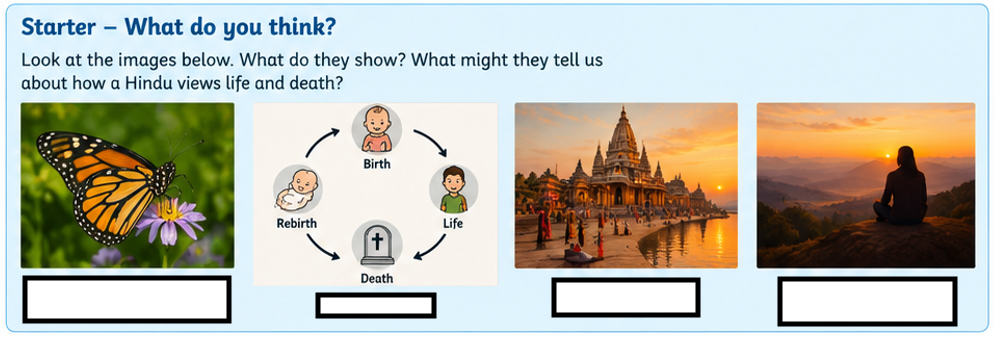
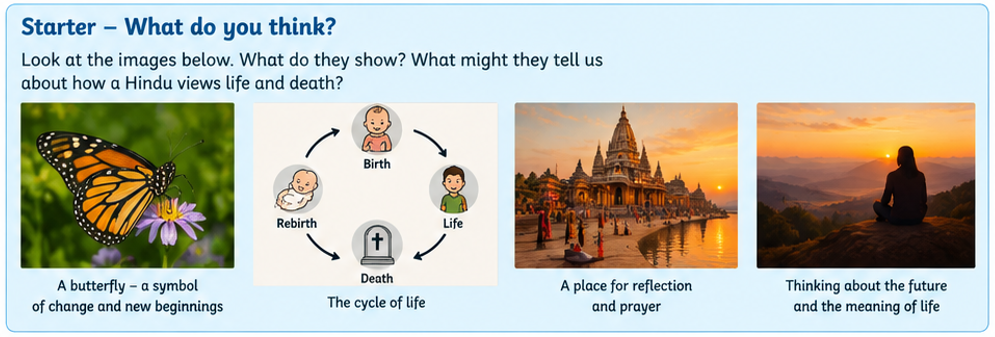
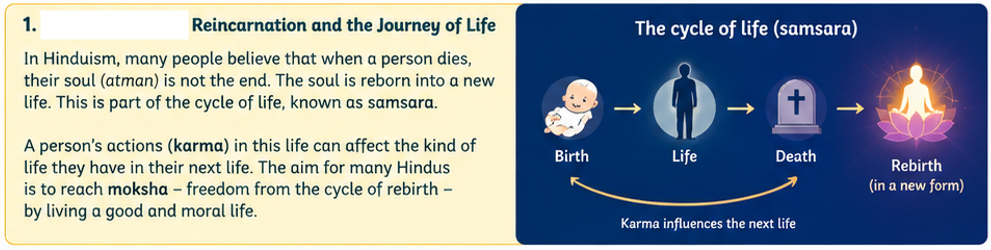
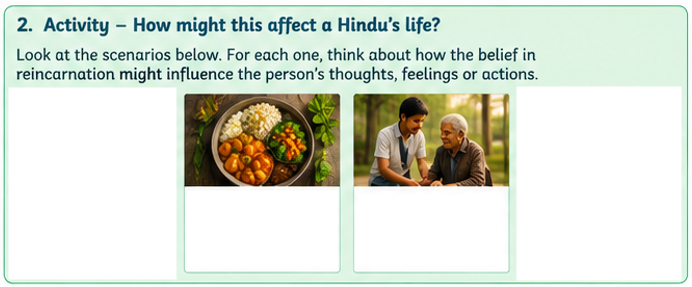
LC: To explain how belief in reincarnation might affect the way in which a Hindu views the ‘journey of life’.
Key vocabulary

The belief that, after death, the atman (inner self or soul) is reborn into another life. Samsara is the cycle of birth, death and rebirth.

Karma
The belief that actions and intentions have consequences, influencing future experiences and, in Hindu traditions, future births.

Dharma
Living according to one's duties and responsibilities and trying to do what is right.

Liberation from samsara, the cycle of birth, death and rebirth. It is an important spiritual goal in many Hindu traditions.