

Wednesday 17th June

LC: to participate in discussions about literature, building on our own and others' ideas and challenging views courteously

We are going to look at different versions of the same scene in Macbeth.
Each of the extracts will be a retelling of the original playscript by Macbeth - like the Marica Williams one we have been reading.
We are going to read and compare them to decide which ones we like the best, the least and we will share the reasons for our preferences.


Macbeth retold by Anna Claybourne
Macbeth retold by Martin Waddell
Mr William Shakespeare's Plays presented by Marcia Williams
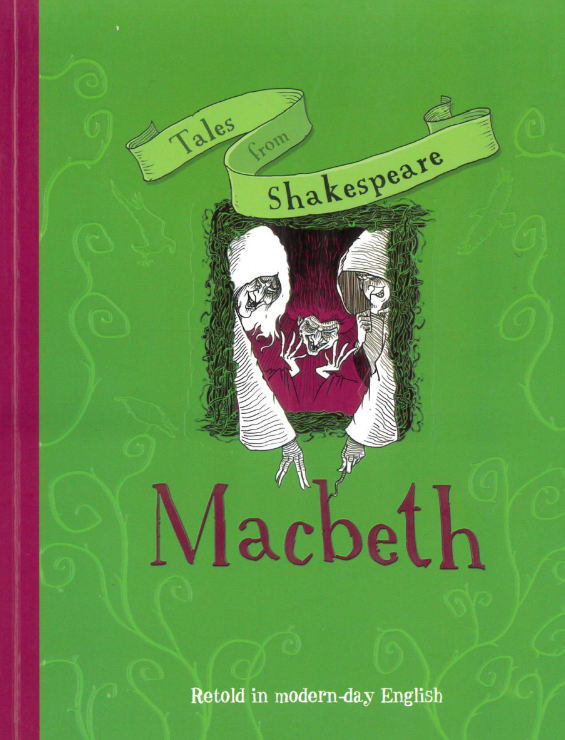
Tales from Shakespeare Macbeth
Original Shakespeare Playscript

I preferred text .... because ...
My favourite text was .......
The reasons I liked ..... the best was because .....
My least favourite version of the play was .....
The one I liked the least was .....
Revision 4
pp 171-172
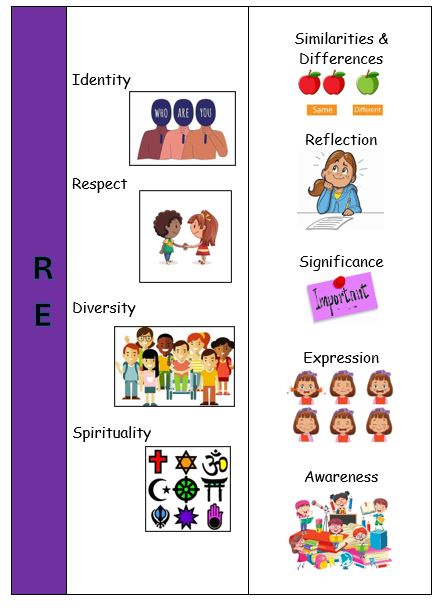
LC: To know that the Torah is used by Jewish people as a source of guidance (Awareness).
Let's recap. What do we know about the Torah?

/i/video/_25__What_is_the_Torah____Religious_Studies_-_My_Life__My_Religion__Judaism_-_YouTube_-_Google_Chrome_2024-05-29_13-35-39.mp4
The Torah contains 613 rules that teach people how to live.
Find out how some of these rules impact on Jewish people.
/i/video/Jewish_Home.mp4
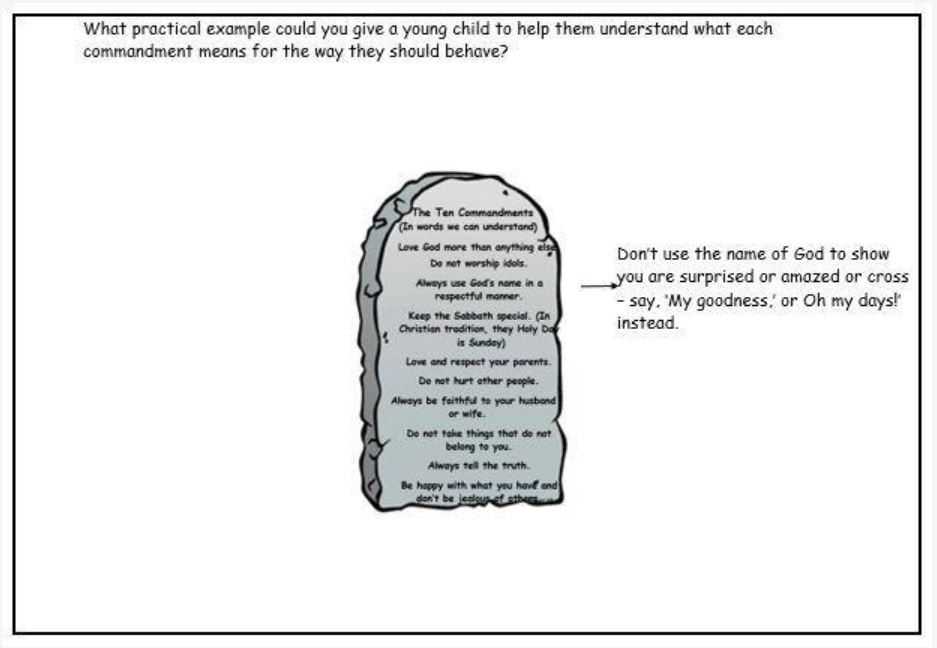
The Ten Commandments are very important rules for most Jewish people.
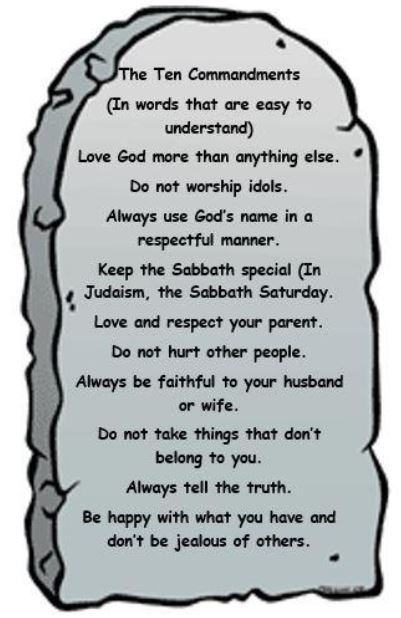
The Ten Commandments still hold great significance for Jews today for many reasons. Most Jewish people believe:
- They are a guide for Jewish living today.
- Following the Ten Commandments is part of the covenant made at Mount Sinai, which applies to all Jews.
- God will judge Jews on how well they have observed these commandments.
- Following the commandments helps Jews to become better people today.
- The commandments help Jews to treat other people with respect.
- The commandments guide Jews to love and worship God effectively.
Here's how one of the rules is followed by many Jewish people.
Keep the Sabbath special.
The sabbath (‘shabbat’) is of particular importance in a Jewish home. Jewish law requires Jews to refrain from various acts of “work” on the sabbath, in commemoration of God’s resting on the seventh day of creation. The prohibited acts of “work” include travelling (other than on foot), cooking, writing, carrying, the switching on and off of electricity, using a telephone and any transaction of a commercial nature such as shopping. The sabbath starts on Friday about one hour before nightfall or 15 minutes before dusk. So a practising Jew needs to leave work or school or anywhere else, in enough time to arrive home by the beginning of the sabbath The sabbath lasts for approximately 25 hours from whatever time it starts.
Task