


Monday 2nd November 2026

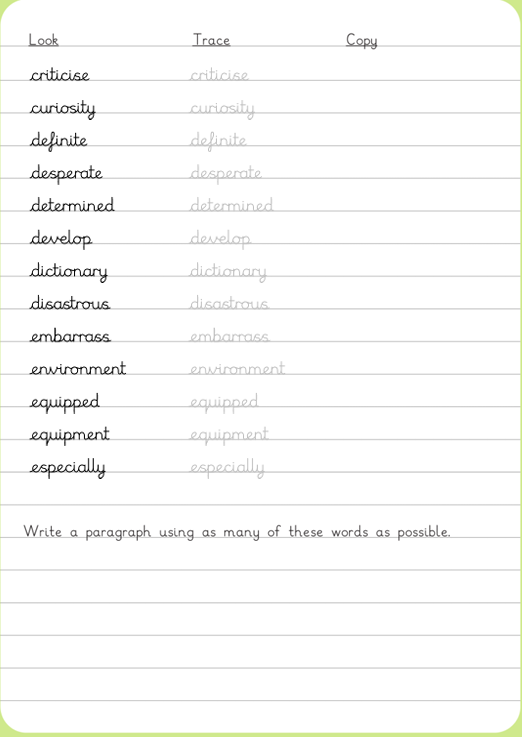
Handwriting Lesson 7
What do these words mean?
Can you write these words into your handwriting books using the leading in method.
LC: To summarise main ideas drawn from one paragraph.
RIC
It was the morning of the school fair, and Mia could hardly sit still. She had been helping her mum bake cupcakes all week, and now they were finally ready to sell. The air smelled of popcorn and candyfloss, and the sound of laughter filled the playground. Mia spotted her best friend, Leo, carrying a basket of raffle tickets. “Good luck with your stall!” he called. Mia smiled and waved, feeling proud of the colourful cupcakes she and her mum had made.
R - What did the air smell like at the fair?
I - What might Mia’s stall be selling? How do you know?
C - Why do you think the author wrote 'Mia could hardly sit still'?
Main
Steps to Summarise a Paragraph:
-
Read Carefully – Read the paragraph slowly to understand what it’s about.
-
Find the Main Idea – Ask yourself: What is the paragraph mostly about? This is usually in the first or last sentence.
-
Pick Key Details – Look for 2–3 important facts that explain or support the main idea.
-
Ignore Extra Details – Skip small examples, repeated ideas, or unimportant details.
-
Put it in Your Own Words – Write 1–3 sentences that explain the main idea and key details in simple words.
Let's highlight key words and phrases and summarise the below paragraph.
Zeka woke up early on a sunny Saturday morning. He was excited because today he was going to the fair with his friends. He quickly got dressed, ate breakfast, and ran to meet them at the bus stop. When they arrived at the fair, Zeka’s eyes widened at all the colourful rides, games, and food stalls. He rode the Ferris wheel, played a ring toss game, and won a small stuffed bear. By the end of the day, Zeka was tired but very happy, and he couldn’t wait to go back again next year.
Activity
Highlight key words and phrases and summarise the below paragraph.
Emma loved visiting her grandmother’s house in the countryside. One afternoon, she wandered into the garden and noticed a tiny, sparkling door at the base of an old oak tree. Curious, she knelt down and gently opened it. To her surprise, she found a miniature world inside, with tiny houses, flowers, and little creatures scurrying about. A small fairy with shimmering wings flew up to her and introduced herself as Lila. The fairy explained that Emma had been chosen to help protect their magical village from a sneaky goblin. Emma felt a mix of excitement and nervousness but promised to help, beginning an adventure she would never forget.
Monday 2nd November 2026
LC: To engage with ideas around a new reading text.
Grammar Warm Up


- Who do the children think the place is for?
Do you have questions about the person?
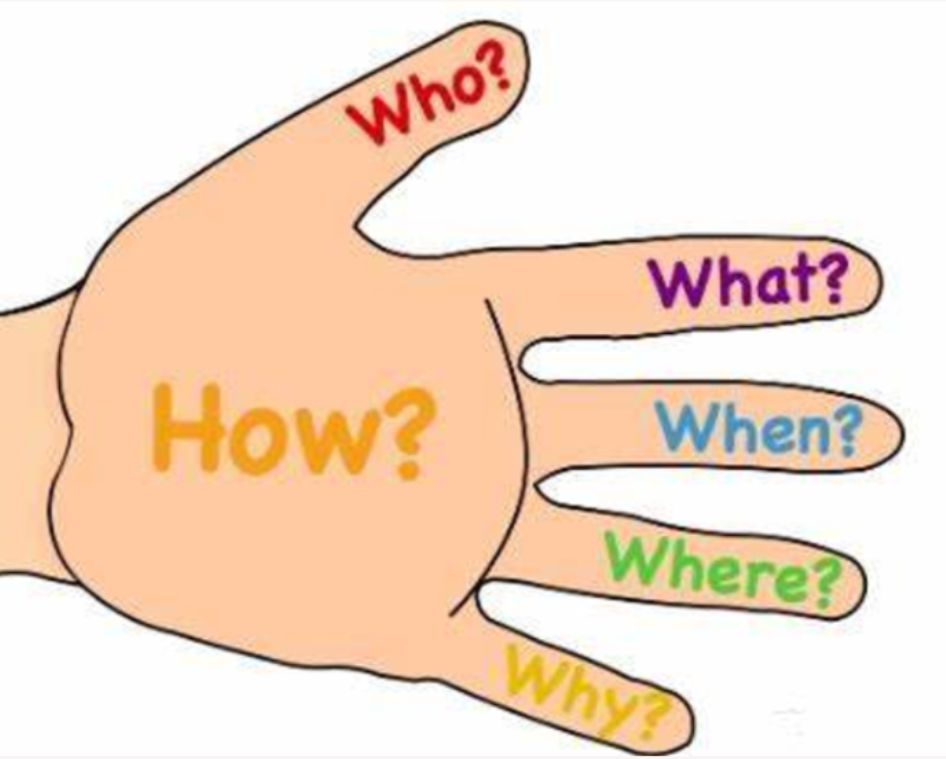
Talk Partners: what questions might you have for the person?What is your name?
Why did you come to this school?
How do you feel about starting a new school in year 5?
Adapted:
Write a question for the person. Remember to start your question with a capital letter and end with a question mark (?).
LC: To explore why rule are important in helping communities live and work together safely and fairly.
Year 5 Key Question: Where can we find guidance about how to live our lives?
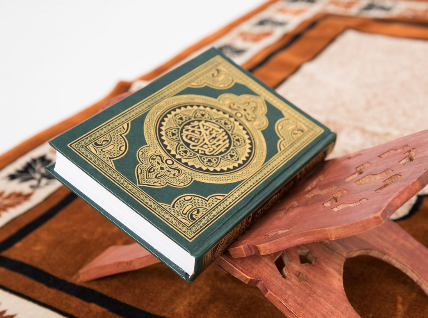
Our Focus Question this half term: Why is the Qur’an important to Muslims?
We are going to explore the origin and role of the Qur’an as a source of wisdom and authority for Muslims.
First of all, let’s focus on rules and why they are important in communities.
Discuss in your talk partner: What does the word authority mean?
The images below are of the MPs and Lords in the House of Commons and the House of Lords in Westminster.
They are the people who have the authority to discuss and devise rules and guidance for the nation.
What symbols of authority can you see in the pictures? Religious people are often guided by their holy books. For members of faith communities these are an important source of authority and guide them in how to live their lives.
Which holy books can you name?
Task

Adapted:
Light Over Darkness — Rama and Sita

Big question: Can goodness overcome evil?
Key message: We can choose courage, honesty and kindness, even when things are difficult.
"Have you ever been frightened of the dark? What happens when somebody switches on a light?"
A tiny light can make a big difference in a dark room. In the same way, one kind action can make a difference when someone is feeling unhappy or alone.
Story: Rama and Sita
Prince Rama and Princess Sita lived happily until they had to leave their home and live in the forest. While they were there, the powerful king Ravana took Sita away to his kingdom.
Rama, with help from Hanuman and an army of allies, set out to rescue Sita. After a great battle, Ravana was defeated. Rama and Sita were reunited and eventually returned to Ayodhya, where people welcomed them with lights.
Explain that the story is important in many Hindu Diwali traditions, symbolising the victory of good over evil and light over darkness. Diwali has other important stories and meanings for different communities.
Which actions bring light into the world. They can give a thumbs-up for a positive choice or keep their hands still for an unkind choice.
- Helping someone who has fallen.
- Laughing when someone makes a mistake.
- Inviting somebody to join a game.
- Telling the truth when it is difficult.
- Deliberately leaving someone out.
Reflection
"Rama showed courage when facing something difficult. We may not face battles like Rama, but we face choices every day."
Ask: "What could you do to bring a little more light into someone's day?"
Challenge: Complete one act of kindness today without expecting a reward.
British Values: Mutual respect and tolerance of different faiths and beliefs; individual liberty in making positive choices.
UNCRC: Article 14 — freedom of thought, belief and religion. Article 30 — the right to enjoy one's culture, language and religion.