



Friday 18th September 2026
Rewrite the sentences with the inverted commas around the spoken words. Then identify who might have said each sentence.
I will protect the baby.
Where is my son?
There is a wolf in the room!
I should never have doubted you.
Come back, Gelert!
RIC
King Eurystheus was amazed that Hercules had made it this far so he sent him to capture four man-eating horses. Hercules dug a deep river around the horses that filled with sea water. With nothing but grass to eat, the horses eventually calmed down and were captured.
Hercules’ ninth task was to bring back a magic belt that belonged to a lady named Hippolyte. Hippolyte was happy to help Hercules but was worried that he was really there to start a fight. Wanting to avoid getting hurt, Hercules quickly stole the belt and sailed away.
R - Who was happy to help Hippolyte?
I - Summarise the first paragraph.
C - What tense has the author written in? Past or present?
Main
Friday 18th September 2026
LC: Infer characters’ feelings and thoughts.
An inference is an idea or conclusion that we reach from evidence and reasoning.
Inferring is making an educated guess, a choice, a decision.
We use clues and our background knowledge to make sense of something when we are not explicitly given the information.
Our minds are making inferences constantly. For example, if someone yawns, we infer that they are tired.
Often, like the above example the inferences we make are from visual clues – the things we observe.
Drop off
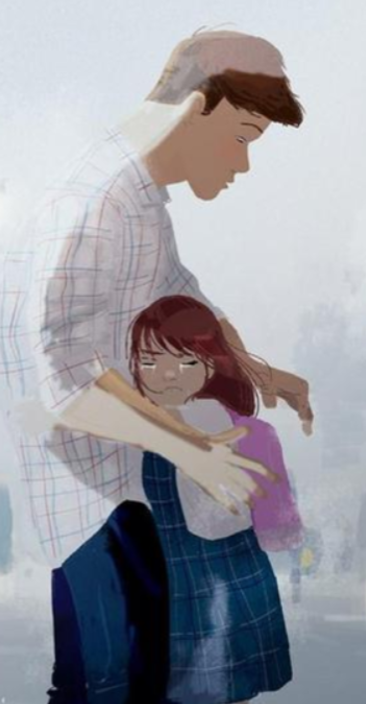
How is the girl feeling?
How do you know?
Why is she feeling that way?
Who is the man?
Where are they?
Does the title give you any clues about this image?
What are the characters thinking?
Does this picture remind you of anything that has happened in your own life?
Independent
What can you infer from observing the picture below?
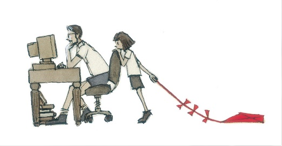
How is the girl feeling?
How do you know?
Why is she feeling that way?
Who is the man?
Where are they?
What are the characters thinking?
Does this picture remind you of anything that has happened in your own life?
Friday 18th September 2026
LC: to develop a setting for a narrative
Grammar Warm Up
LC: to create complex sentences with a relative clause for 'who'
Complete these sentences using a relative clause with who/which.
Gelert ....
The baby ...
The wolf ....
The castle ...

Paragraph 1 of our legend story will describe
the setting.
This is the setting for your teacher's story.

Look at these pictures to help you think of your setting.


the ancient, grey castle built high on the hill

tall, impressive windows decorated with bright silver paint
Here is some vocabulary to help you:

18.09.2026
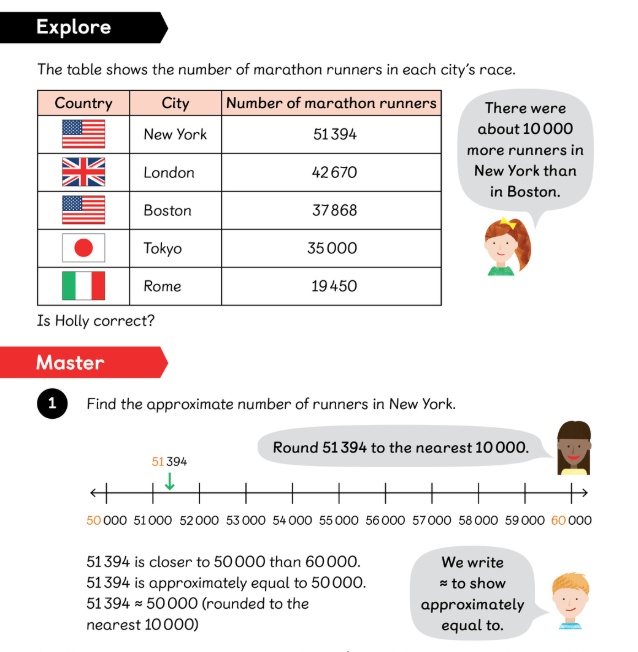
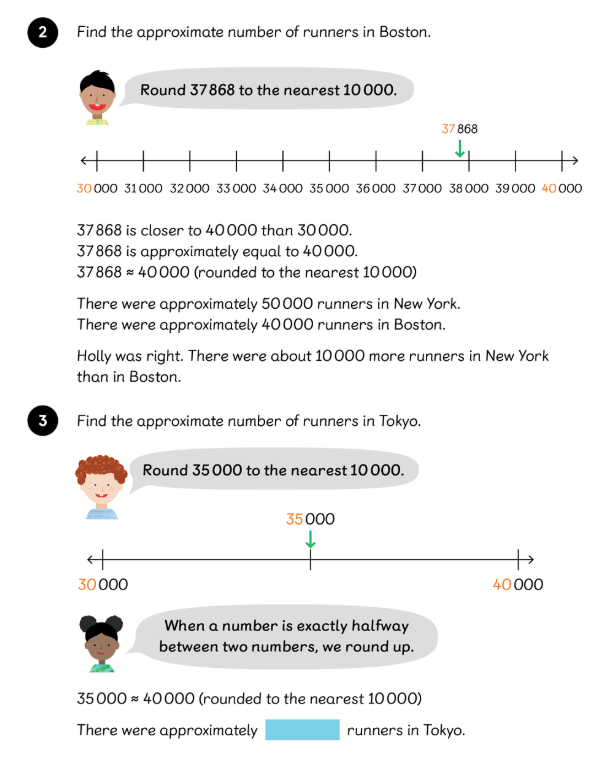
LC: To be able to round numbers to the nearest 10 000 using number lines.
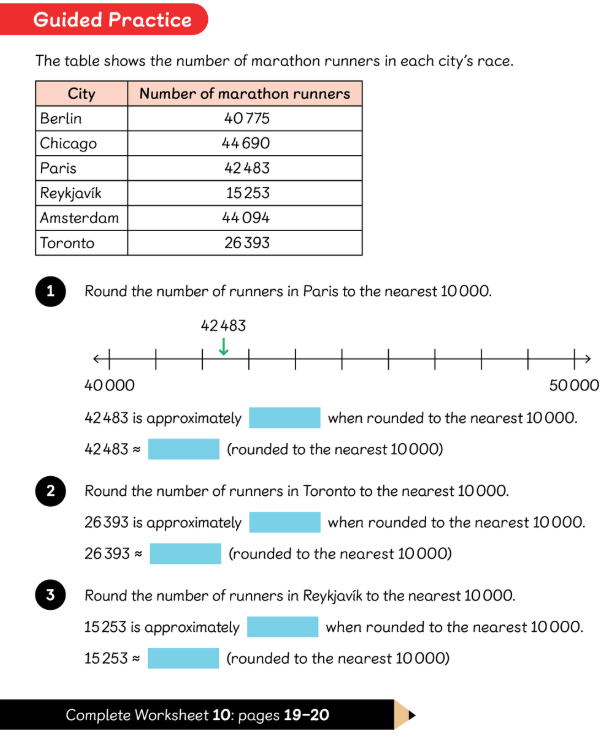
Adapted:
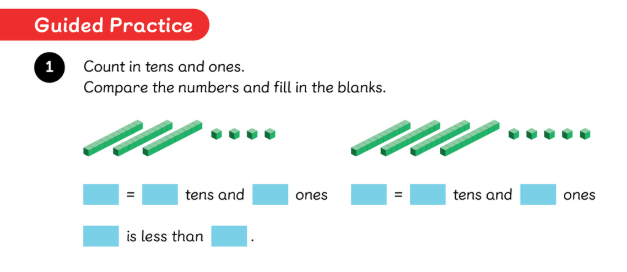
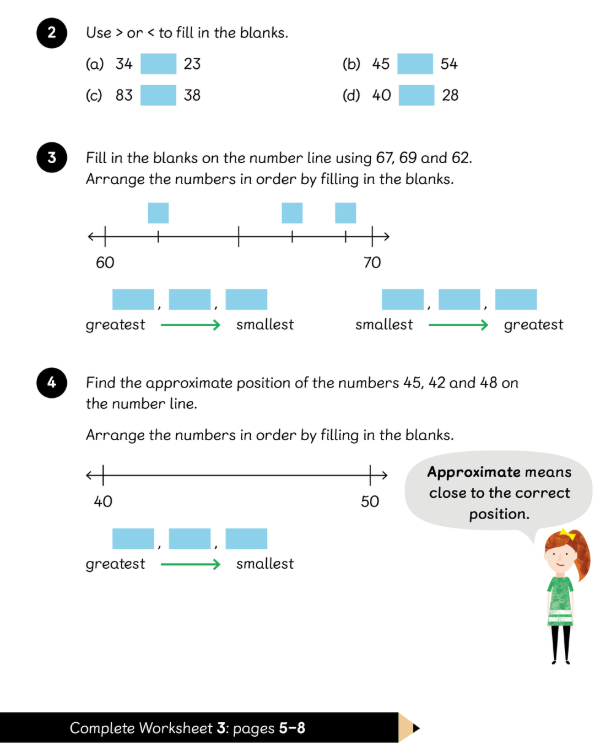
LC: To compare numbers up to 100.
Friday 18th September 2026
LC: To test the effects of gravity
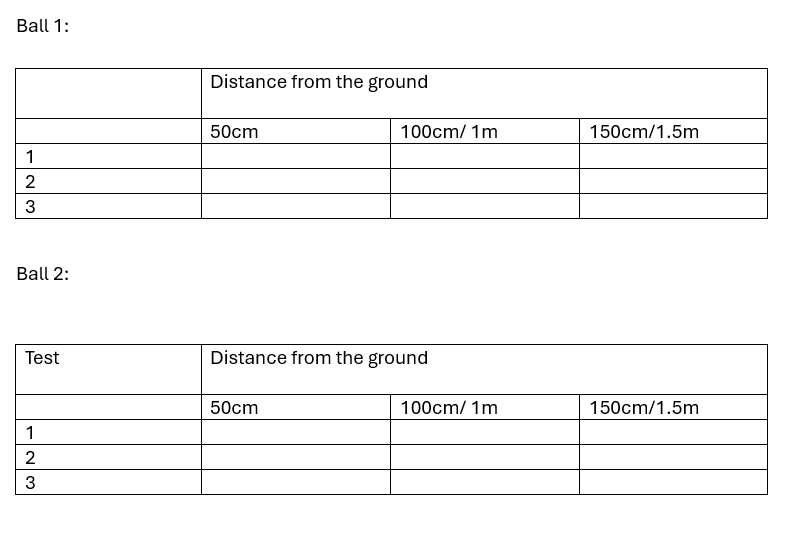
To test how gravity works, we will drop a ball from different heights . Each ball will be dropped three times to make our test fair. We will use a stopwatch to measure how long it takes each ball to hit the ground. Afterwards, we will compare the times to see what we notice about gravity.
We will do the same test and use a different size ball and drop it from the same heights and look at how long it takes to hit the ground.
We can use both investigations to comment on how height and mass affects gravity.
Our findings: ( Write your findings)
Adapted:
LC: To explore gravity.
What is gravity?
Gravity pulls things down to the ground.
Today we are going to drop different balls and watch what happens.
What do you think?
Look at the balls.
Which ball will hit the floor first?
Point to your prediction.
I think the __________ ball will hit the floor first.
Our investigation
We will:
- Choose a ball.
- Hold it at the same height.
- Drop the ball.
- Watch it fall.
- Do it again.
Remember:
We DROP the ball.
We do not THROW the ball.
What happened?
Circle or point:
The ball went:
⬆️ UP ⬇️ DOWN
Did all the balls fall?
YES NO
Did the balls hit the floor at nearly the same time?
YES NO
Our finding
Complete the sentence together:
When we let go of a ball, it falls __________.
⬆️ up ⬇️ down
What have we learned?
Gravity pulls objects down towards the ground.
Say it together:
“Gravity pulls things down.”
Forgiving and Being Forgiven
Theme: Forgiveness, fresh starts and boundaries
British Values: Mutual respect; tolerance; individual liberty
UNCRC: Articles 12, 19 and 29 – being heard, being safe, and education that develops respect for others
Opening thought:
Someone has genuinely apologised to you. Do you have to immediately say, “That's OK”?
Forgiveness can be powerful, but it isn't always instant.
Forgiving somebody can mean deciding that we don't want anger about what happened to control what happens next. It can allow friendships and communities to heal.
But forgiveness doesn't mean pretending that something didn't happen. It doesn't mean that hurtful behaviour suddenly becomes acceptable. And if someone has made us feel unsafe, we should always tell a trusted adult.
Being forgiven also brings responsibility. If somebody gives us another chance, we can show that we value it by learning from what happened and changing our behaviour.
Think of a pencil with an eraser. The eraser allows us to correct a mistake, but we still have to write the next part carefully.
Reflection:
Think silently about these questions: Is there somebody I need to forgive? Is there somebody whose forgiveness I need to ask for? What could a fresh start look like?
Take-away:
Forgiveness can offer a fresh start, but a fresh start also asks us to make better choices.
British Values link: Mutual respect and tolerance help us live alongside people who sometimes think, feel or behave differently from us. Individual liberty also means that nobody should be pressured into accepting behaviour that makes them feel unsafe.
UNCRC link: Every child has a right to be heard and protected from harm. Article 29 also says education should help children develop respect for the rights and freedoms of others.
May we have the courage to recognise our mistakes, the honesty to say sorry, the kindness to forgive when we are ready, and the wisdom to make better choices next time.