



Wednesday 29th April 2026

RIC: Planet Nine.
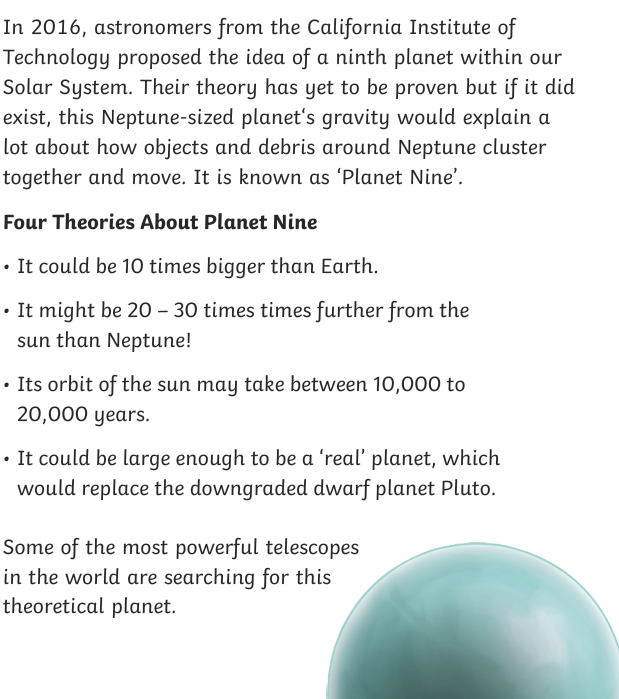
R: Which planet is the same size as the proposed Planet Nine?
I: Why do you think no one has been able to prove that Planet Nine exists?
C: Why has the author used bullet points in this text? Explain your answer.
Wednesday 29th April2026
LC: To identify main ideas using evidence from more than one paragraph.
Linking Ideas Across Paragraphs.
Text: Zara the Secretive Spy
Paragraph 1:
Zara always wore dark clothes and moved quietly through the city streets. She listened carefully to conversations and wrote notes in a small black notebook. No one ever seemed to notice her watching.
Paragraph 2:
One evening, Zara followed a man carrying a heavy case. She stayed in the shadows, making sure he didn’t see her. When he stopped, she hid behind a wall and listened closely to what he said on the phone.
Paragraph 3:
Later that night, Zara returned to her hidden office. She locked the door, spread out her notes, and carefully planned her next move. Everything she did was secret and carefully thought out.
Is Zara secretive?
Zara is ......................... because in paragraph one it says
In paragraph 2 it says
In paragraph 3 it says
Challenge:
Could she be seen differently? give reasons for your answer.
Adapted Group 2:
Zara the Spy
Paragraph 1:
Zara wears dark clothes.
She walks very quietly.
She listens and writes notes.
Paragraph 2:
Zara follows a man.
He has a big case.
She hides and listens.
Paragraph 3:
Zara goes to her room.
She shuts the door.
She looks at her notes and makes a plan.
- Read each sentence together
- Act it out (walk quietly, hide, write)
Zara is ______ because…
Examples:
- Zara is quiet because she walks quietly.
- Zara is sneaky because she hides.
- Zara is careful because she makes a plan.

Wednesday 29th April 2026
LC: To use inverted commas for speech to move the story along- modelled write.
Using the teacher model write the build up of your story with your innovated characters and setting. You will be including some dialogue. What do we need to remember?
Inverted comma's check list
" G ! "
Opening inverted commas
Capital letter
The speech (the words said by a character)
Other punctuation
Closing inverted commas
Reporting clause - who said it and how they said it.
Adapted
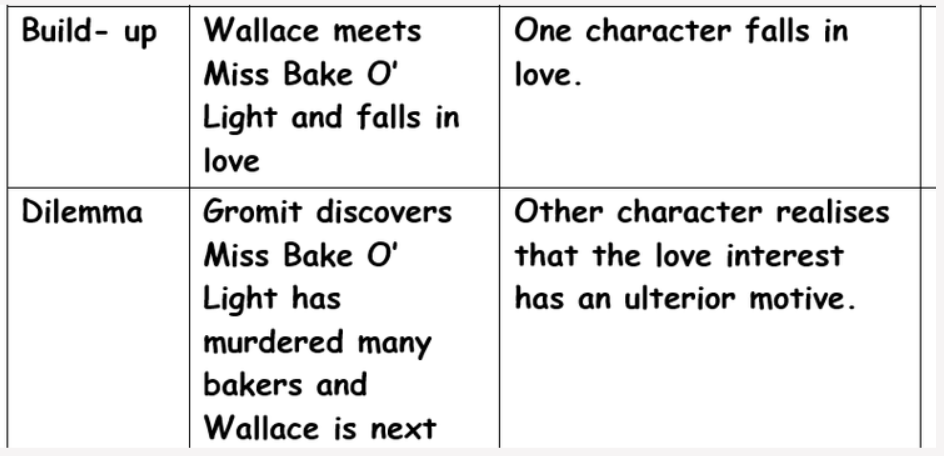
LC: Retell the story of A Matter of Loaf and Death.
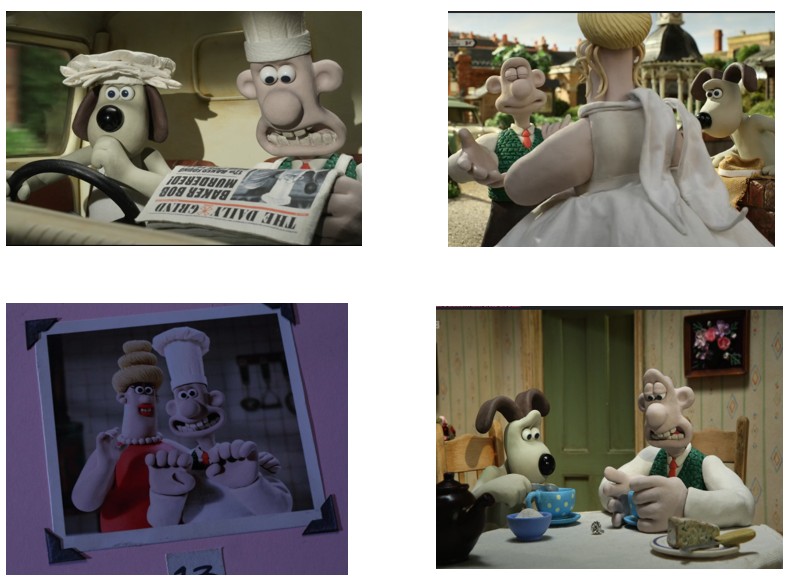
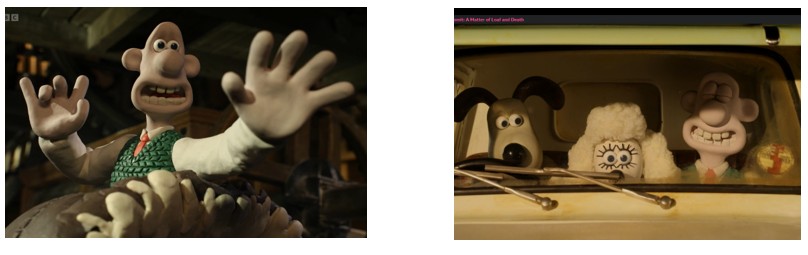 Cut out the third and fourth pictures and stick them in your book.
Your teacher will model two sentences for the dilemma of the story.
Say then write your own sentences.
29.04.26
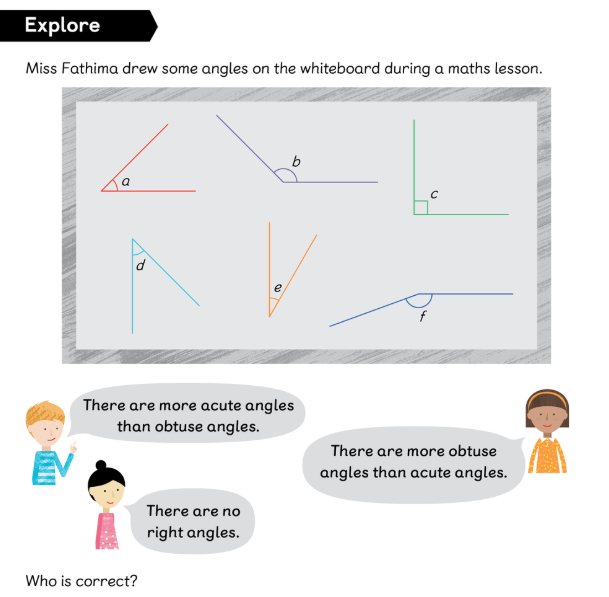
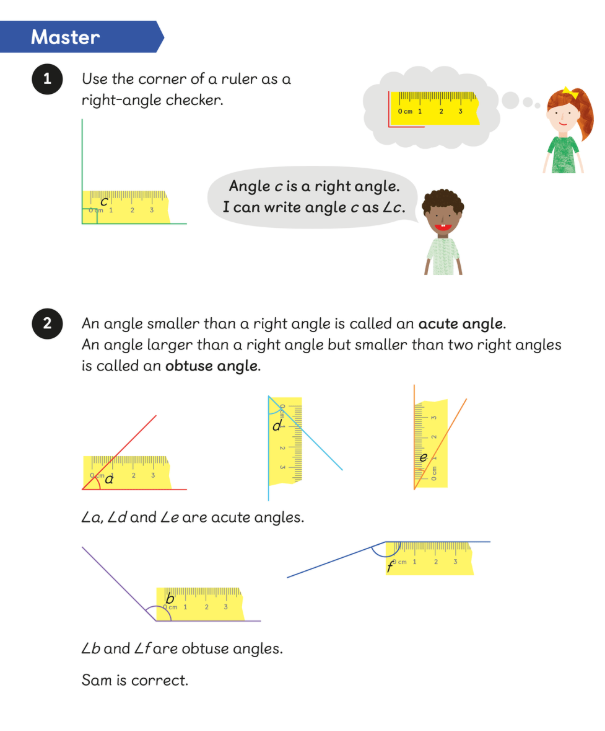
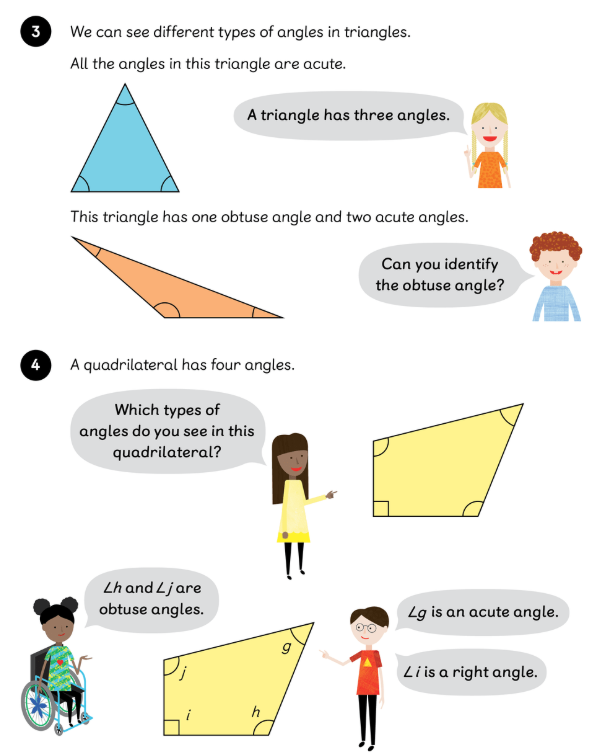
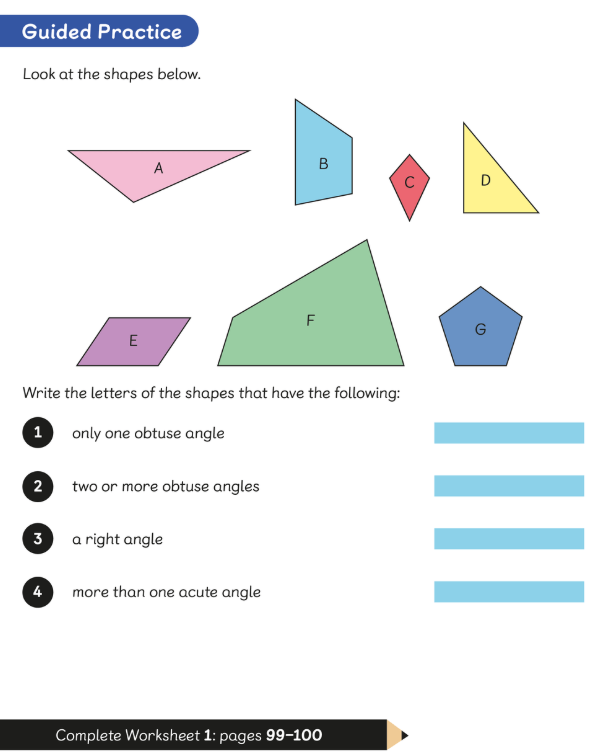
LC: To be able to identify right, acute and obtuse angles.
Adapted:
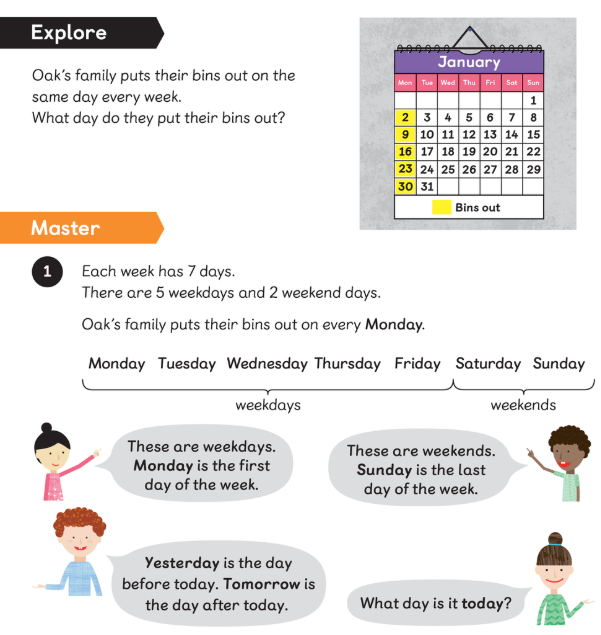
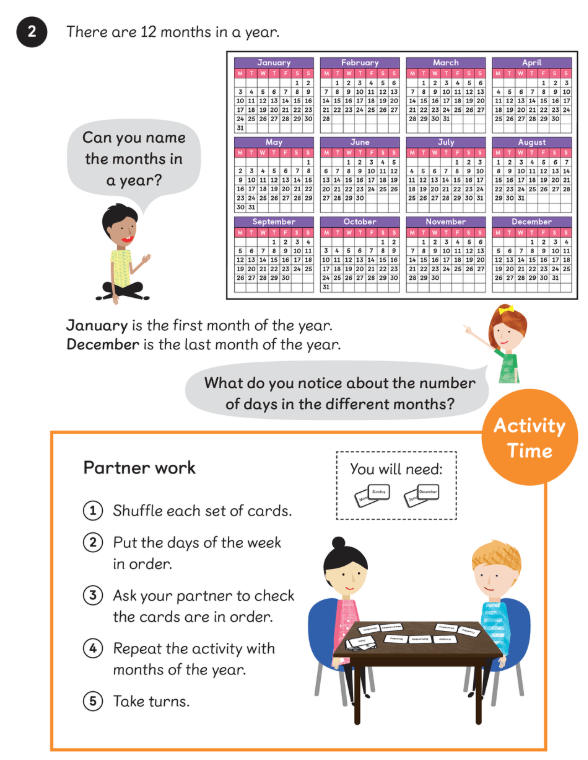
LC: Using a calendar.
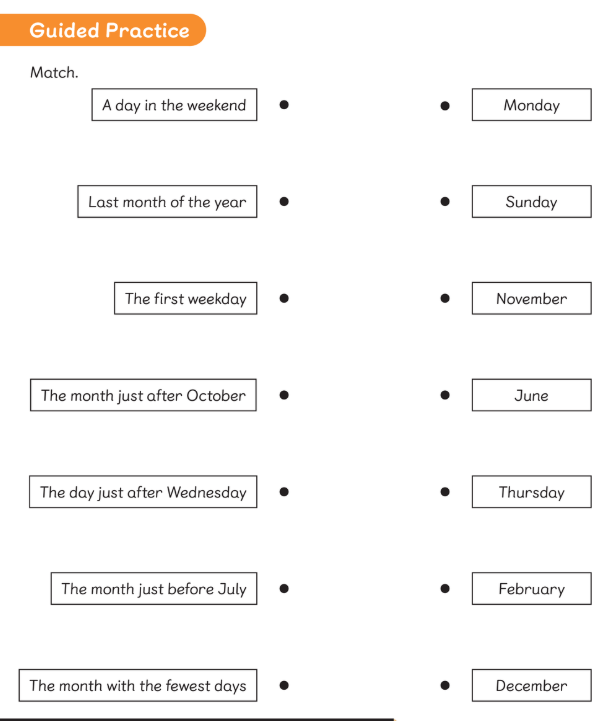
Review
Remember - a homograph is a word that is spelled the same as another word but has a different meaning and often a different pronunciation, too.
Show Me
Listen to each pair of sentences, then write a homograph that fits into them both. Show me your word when I ask you to.
I need to deposit the charity donation at the ________.
We sat on the grassy ___________ and watched the eight ducks swim past.
It looked like an ordinary __________ of chairs but one was painted gold.
After their __________, the twins sat at opposite ends of the table.
I was so busy laughing that a ________ rolled down my cheek.
It was possible to fix the ___________ in my book with tape.
Learning
Focus: Spell correctly and distinguish between homographs with the same pronunciation, e.g. firm, sign, capital.
Read these sentences with me:
The jelly wasn't firm enough to hold its shape.
Dad works for a firm that sells medicine.
The words 'firm' in each sentence have the same pronunciation, are spelt the same but have different meanings.
Let's find the word firm in a dictionary.
What word classes do the different definitions belong to?
Now can you locate the homograph capital in the dictionary. What are the different meanings.
Can you create two sentences to demonstrate each meaning, orally fist and then in writing?
Practise and Apply
Word to Sentence Spellers
Locate the following homographs in the dictionary, then write some sentences that show you understand the meaning of each one.
sign
fine
saw
spring

Wednesday 29th April 2026
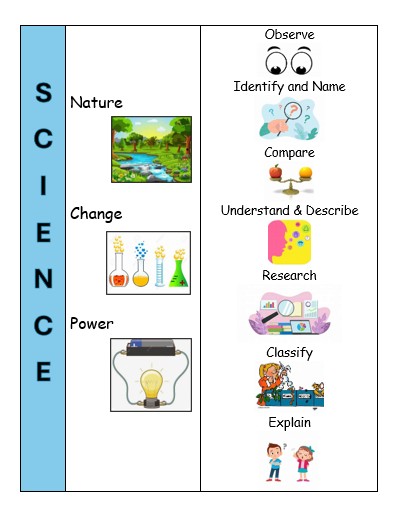
LC: Why does too much building affect living things?
Last week, we concentrated on littering and how that affects wildlife.
Today, we are going to look at urbanisation. What does this mean?
How do you think urbanisation affects wildlife? Discuss.
The world is becoming more and more urban. It has been predicted that by the year 2050, 70% of the human population on Earth will live in cities. People live in towns and cites for many reasons including work, schools, hospitals, to be nearer families and to be able to travel more quickly.
As cities grow and more building takes place, it has an affect on the wildlife that was there before.
The loss of environments
Building homes, schools, work places and roads destroys the environment that was there before. This means that the wildlife needs to adapt or move but where would they go?
Pollution
Cities can be large sources of air pollution, water pollution, land pollution, and soil pollution.
Waste
Cities are a large source of waste. This waste if not managed end up polluting the landscape and waterways. Industrial and toxic waste that is produced in cities can lead to large amounts of pollution of the urban landscape, causing many environmental issues. For example, disturbing pics of animals and birds feeding on plastics and other waste materials have become a common sight these days.
Urban runoff
Much of the rainwater that does fall on the urban landscape quickly runs off into rivers and streams, bringing all of the pollutants and chemicals that were present on these surfaces with them into waterways in turn affecting the life in water bodies.
Light Pollution
There are studies that indicate that all of the human-produced light at night is disrupting the natural sense of a night and daylight cycle for some animals. Nocturnal species that greatly depend on it being naturally dark at night time suffer as it doesn't ever get fully dark in cities.
Noise Pollution
With increased global urbanisation, there is also an increased level of noise, both in volume and in consistency that other organisms are constantly exposed to. Because wildlife is highly dependent on sound, they can become disoriented and their behaviour and communication abilities can be hampered due to the excessive noise levels that they are exposed to in and around urban areas.
Isolation of wildlife and plant populations
As urban development continues across the landscape, wildlife habitat is becoming broken apart and wildlife and plant populations are becoming increasingly isolated from one another. It also reduces the suitable habitat that is needed for their survival.
An increase in human-wildlife conflicts
As human development fragments habitat and leaves wildlife with no place to go, there has been an increase in human-wildlife conflict. Wildlife is hit by vehicles, birds and insects hit windows on cars and buildings and are killed, and sometimes wildlife comes into human communities looking for food and other resources that they need to survive, like foxes. Sometimes, wildlife may be killed if they become aggression or prey on pets or livestock. Sadly, only a few select hardy species can adapt and survive in an urban area and being so close to humans. The pets that humans have can have an effect also. For example, cats like to prey on local wildlife.
Using the information that we have talked about, try really hard to answer the following questions.
Look back and think what things might affect hedgehogs and bees.
1. Why might hedgehogs become endangered? What can we do?
Why are hedgehogs disappearing? - Hedgehog Street
2. Why might bees become endangered? What can we do?
Why Are Honey Bees Endangered? - Earth.Org Kids
Adapted:
1. Why might hedgehogs become endangered? What can we do?
Why are hedgehogs disappearing?
Hedgehogs are finding it harder to survive because:
- Their homes (fields, hedges and gardens) are being built on
- Gardens are being fenced in, so they cannot move around easily
- There is less food like insects and worms
- Roads are dangerous and many are hit by cars
What can we do to help?
- Make small holes in fences so hedgehogs can travel between gardens
- Keep gardens a bit wild with leaves and bushes for shelter
- Avoid using harmful bug sprays
- Put out shallow dishes of water or hedgehog food
2. Why might bees become endangered? What can we do?
Why are bees disappearing?
Bees are in danger because:
- There are fewer flowers for them to get nectar from
- Pesticides (bug-killing sprays) can harm them
- Their habitats are being built on
- Pollution can make it harder for them to survive
What can we do to help?
- Plant flowers that bees like (such as lavender and wildflowers)
- Let some areas of gardens grow wild
- Avoid using harmful sprays on plants
- Build bee hotels for shelter
Task:
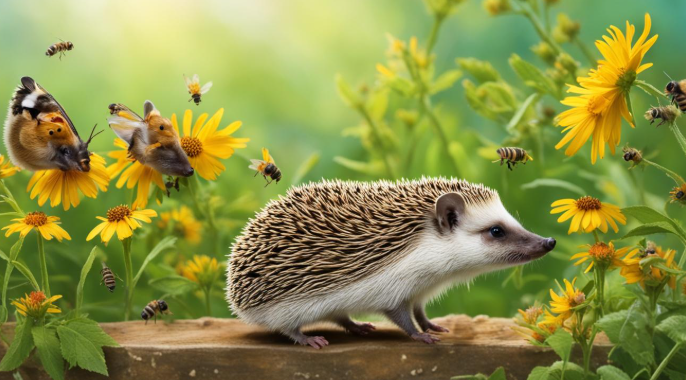
- Draw a hedgehog and a bee.
- Next to each one, write:
- Where they live
- What they eat
- Finish this sentence:
“Cities can be bad for wildlife because…”
- Finish this sentence:
“We can help wildlife by…”
Our School Commandments
The Ten Commandments helped guide people long ago. We also have rules to guide us.
Some commandments link to our school rules:
- Do not steal → Respect others’ property
- Do not lie → Always tell the truth
- Do not hurt others → Be kind and safe
- Respect parents → Respect teachers and adults
These help make our school a safe and happy place.
Reflection:
Think quietly: Which rule do you follow well?
Discussion:
Turn to someone near you: Which rule could you improve on this week?