



Tuesday


RIC

R: On which day did they hear from another passenger ship?
I: What type of ship do you think they are on? Explain your answer.
C: This text is called Diary of a Voyager. Based on what you’ve read, what would be an appropriate new title for this text?
Tuesday 13th October 2026
LC: To analyse how specific information is organised within a non-fiction text.
Talk Partners:
What is a non-fiction text?
Why is it different from a fiction text?
Teacher Model:
Your turn: Label the texts with the following features, there may be some features not included in the text.
text boxes, sub-headings, contents, bullet points, glossary, diagrams


Punctuation Warmup
LC: Use inverted commas and other punctuation to indicate direct speech.
Collect and classify
When we write speech, the reporting clause tells us who has spoken and how they said the words.
Speech followed by a reporting clause:
"I think she's taking us home," whispered Ishbel.
Reporting clause followed by speech:
Ishbel sighed, "I'm hungry. Are you hungry?"
Split speech with a reporting clause in the middle:
"I'm hungry," said Kenneth. Are you hungry?"
"Neither can I, said Ishbel, "and that great big monster is probably still under us right now!"
Omitted reporting clause:
She took the key from Kenneth. "I'll open the door. You stay safely back.
Can you find more examples?
Tuesday 13th October 2026
LC: Generate ideas for a story.
This is the plot pattern for our story. We will create different ideas for new characters, a new problem and resolution.

What might the problem be for a different monster? How might the children solve the problem (resolution)?

LC: To be able to subtract with renaming in the thousands, hundreds, tens and ones columns.



Tuesday 13th October 2026
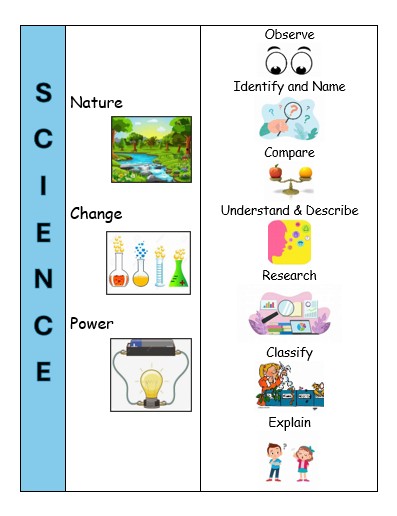
LC: To name some materials that are conductors and some that are insulators.
What are conductors?
What are insulators?


Group investigation:


Adapted

Tuesday 13th October 2026
LC: Know the rules for adding the suffix 'ly'
Review
Can you compose and write a sentence (this can be a silly sentence) which contains as many of these words as possible. You will also need to add some of your own words to ensure the sentence makes sense. You will get one point for each of the words you have spelled correctly.

Learning
Can you remember what a suffix is?
 A suffix is a type of word ending used at the end of one word to turn it into another word.
Suffixes cannot stand on their own as a complete word.
Let's remind ourselves of the spelling rules for adding the suffix –ly.
We will use the sticky word strategy Colourful Words to apply each rule:
Rule 1
For most words, 'ly' is added straight on without any change to the last letter
For example
actual actually
different differently
Rule 2
If the root word ends in -le, the -le must be dropped before adding -ly,
For example
gentle gently
wrinkle wrinkly
Rule 3
If the root word has more than one syllable and ends in -y with a consonant before it, the y is changed to an i before the suffix is added.
For example
easy easily
greedy greedily
Read with me:
basic basically
dramatic dramatically
practical practically
What do you notice?
How does each root word end?
What happens to the -ly suffix?
If the root word ends in -ic, -ally is added rather than just -ly. (There is one exception to this - the word publicly).
We can use our Colourful Words strategy to help us remember the tricky parts of spelling words.
frantic frantically
Write these words in your book using the strategy.
critic critically
This rule is also true for the words accident and occasion. Although these root words don't end in -ic, -ally is added rather than just -ly.
accident accidentally
occasion occasionally
Practise and Apply
Look at these words.
Using the Colourful Words strategy to help you remember how to spell them, say then write each one in a sentence.
actually
greedily
accidentally