


Friday 27th February
Friday 27th February 2026
LC: To know how to keep healthy.
We already know that a healthy balanced diet is important!
What else do we need to keep up being healthy?
Activity
Go on to SeeSaw.
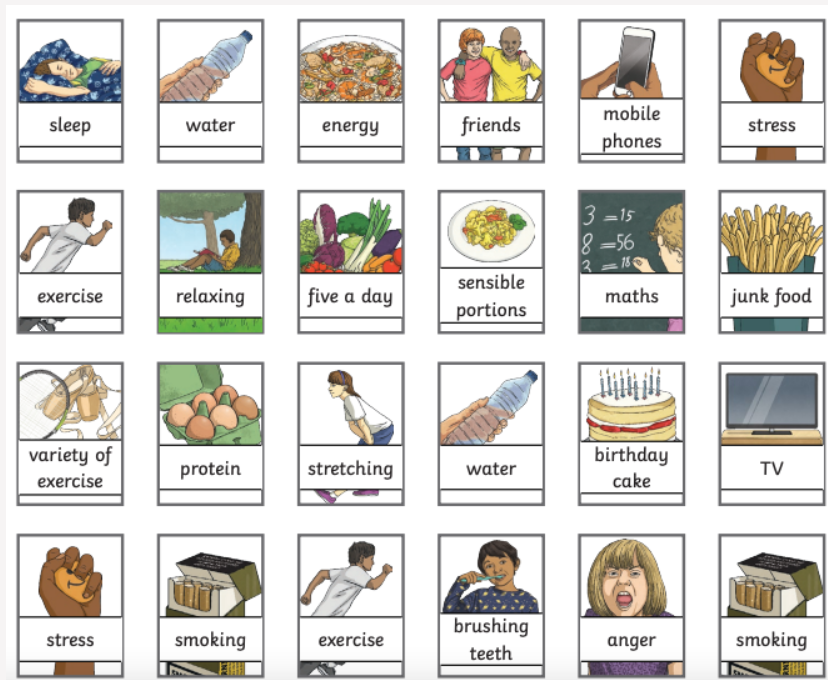
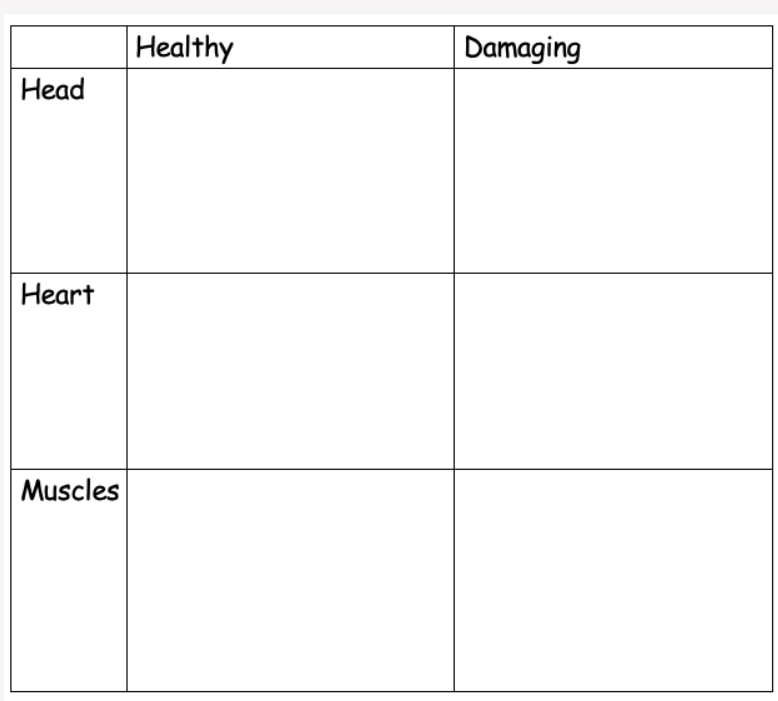
Look at the images below. With your talk partner you have to decide which ones belong in each category (head, heart and muscles).
Be careful! Four images don't belong in any category... they are there to trick you!
LC: Discuss and record ideas for planning.
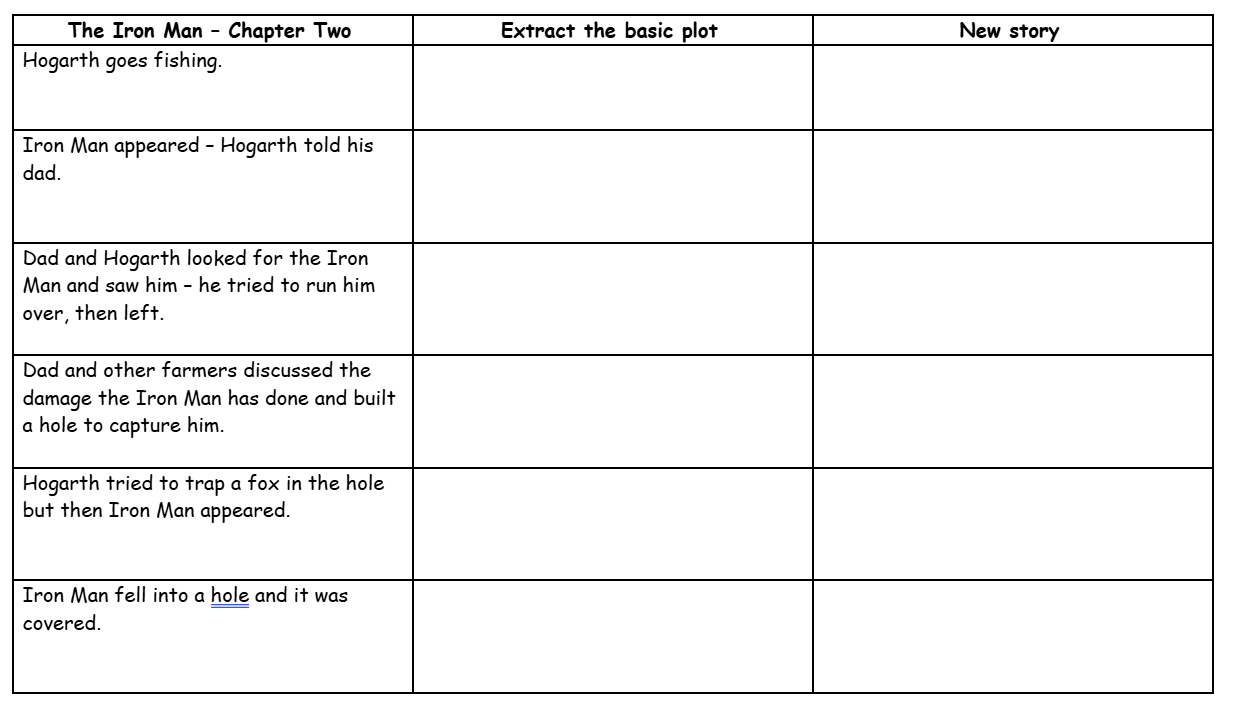
On Wednesday, we looked at extracting the plot and writing the bare bones of our story!
Today, we are going to go back to our table and have a look at creating our own story with a new character, changing different things.


Friday 27th February 2026
LC: To identify rocks based on their appearance and physical properties.
Key vocabulary:
Appearance - The way something looks
Physical Property - A physical property is any property that can be observed using the five senses or can be measured. Common physical properties include mass, volume, weight, color, size, and texture.
Properties and uses: Soft and hard rock
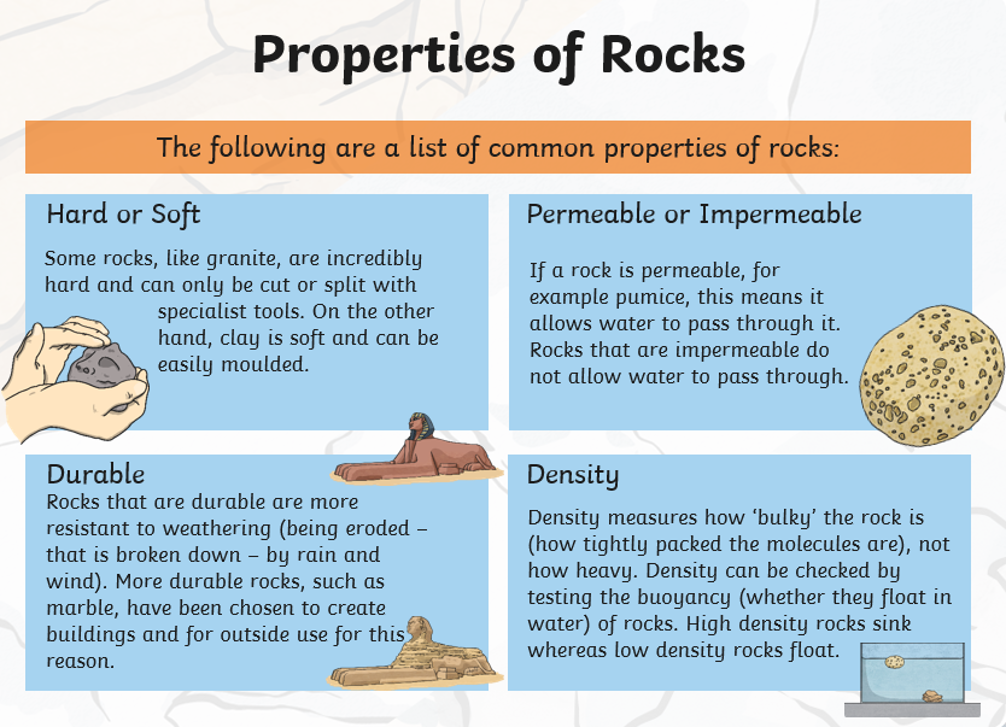
Some rocks are harder than others. For example, granite is a very hard rock. This makes it a good material for building as it doesn’t wear away easily.
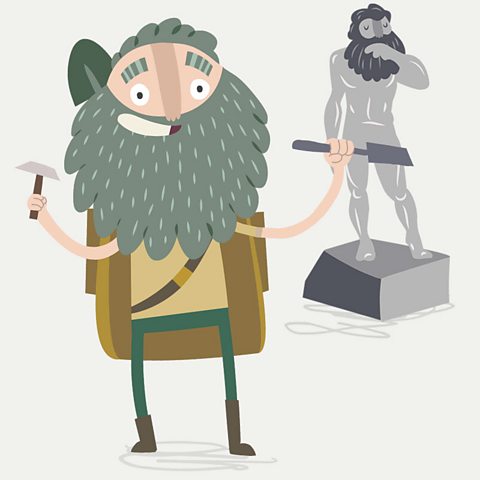
Marble is another hard rock. It has an attractive texture and colour and it can be cut and polished. Because of this, it is used to make floor tiles and wall tiles. Some statues are made from marble too.
Chalk is a soft rock and wears away easily. This makes it ideal for making chalk sticks to write on blackboards.
Activity
Now it's time to identify rocks from their appearance and physical properties. Let's read the descriptions on your worksheet as a class.
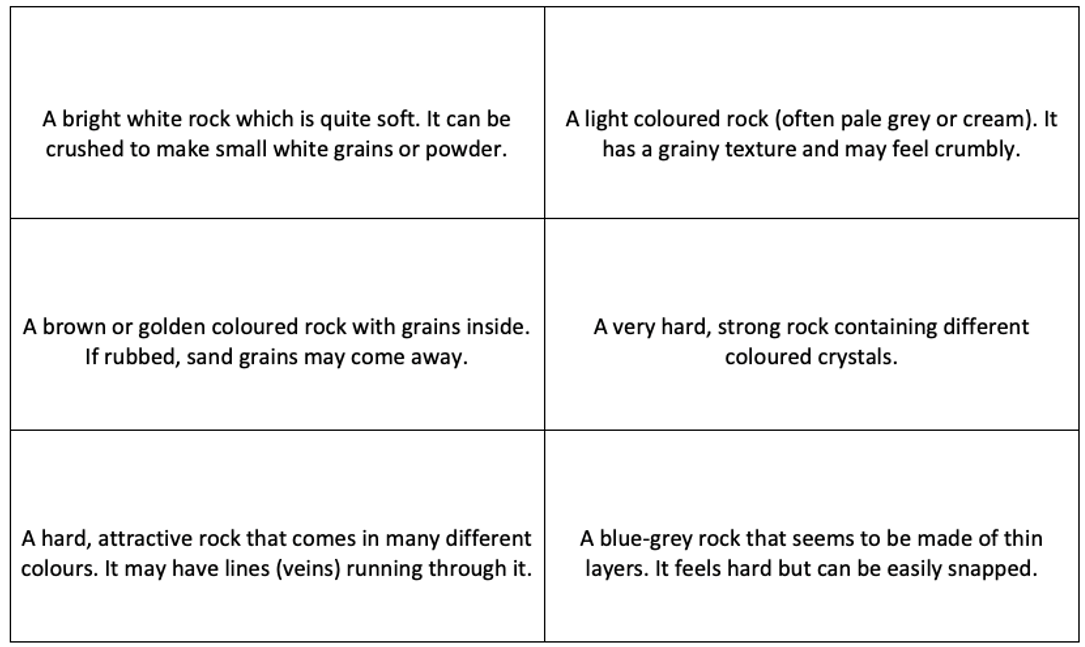
There are six types of rocks around the classroom.
Chalk Sandstone Granite
Slate Marble Limestone
In small groups, you will look at the rocks closely and feel them. You will then write the name of the rock above the correct description.