

Tuesday
To be able to use the terms 'quicker', 'slower', 'earlier' and 'later' when comparing time.
To begin this lesson, ask a volunteer (or a teaching assistant) to start folding a square piece of paper into quarters at the same time as you. Purposely, one of you must be slower. When the first person finishes, stop and ask pupils to discuss who was quicker and who was slower. How do they know?
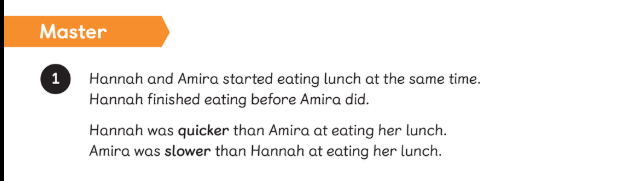
Next, introduce the class to the Explore task. If both Hannah and Amira were eating lunch at the same time but did not finish at the same time, can we say that one child finished earlier?
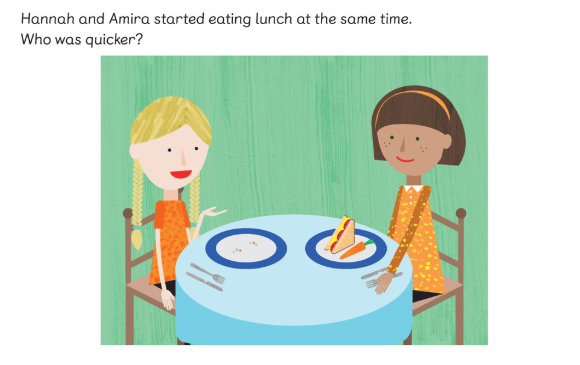
Allow pupils time to discuss before showing pupils the sentences in Master 1. Are there other terms we can use to describe time when we have to be somewhere by a certain time?
 Look at Master 2 and introduce the terms earlier and later. Would we say that the sprinter was earlier to finish the race? Why or why not? When do we use the term 'quicker' and what is different about 'earlier'? These prompts need to be introduced into the initial discussion with pupils. Provide more examples for them to use these terms.
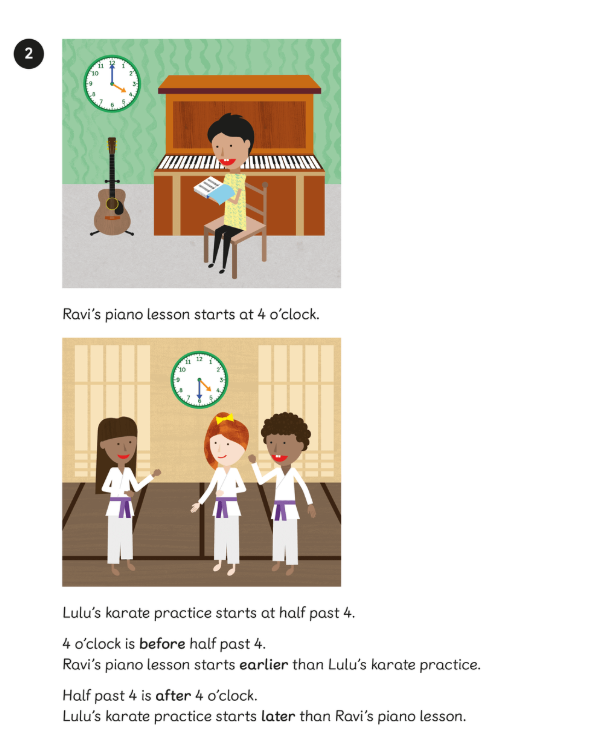
Could we say that Ravi's piano lesson starts quicker than Lulu's karate practice? Why or why not? When do we use the terms 'quicker' and 'slower', and what is different about 'earlier' and 'later'? How do 'before' and 'after' relate to the terms we use to compare time? Provide pupils with more examples using these terms.
Complete this together
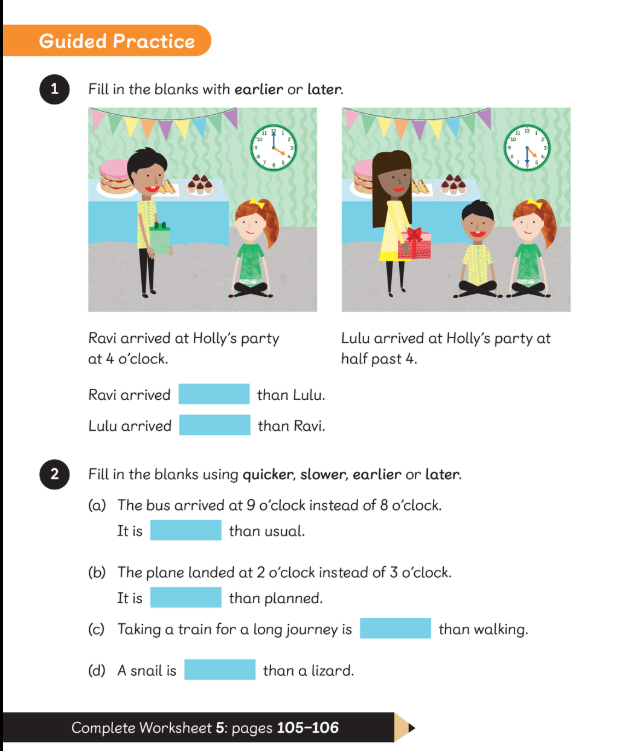
Now its your turn, complete pages 105 and 106.
Read the question for the children to work out and write the answer.
Introduce and discuss key vocabulary, linking meanings of new words to those already known.
Grammar warm up

What type of train do you think our pet train is?
That's right - it's a steam train.
Our pet train knows a lot about trains and wants to share some special words with us.
Let's talk about these words together and add to the English Learning wall:
railway cars
carry
goods
track
chug
freight
containers
passenger
monorail
powered
electricity
subway
underground
signs
signals
crossings
Can you spot any of these words in this article about different types of trains? Tap on the photo below to read all about them...
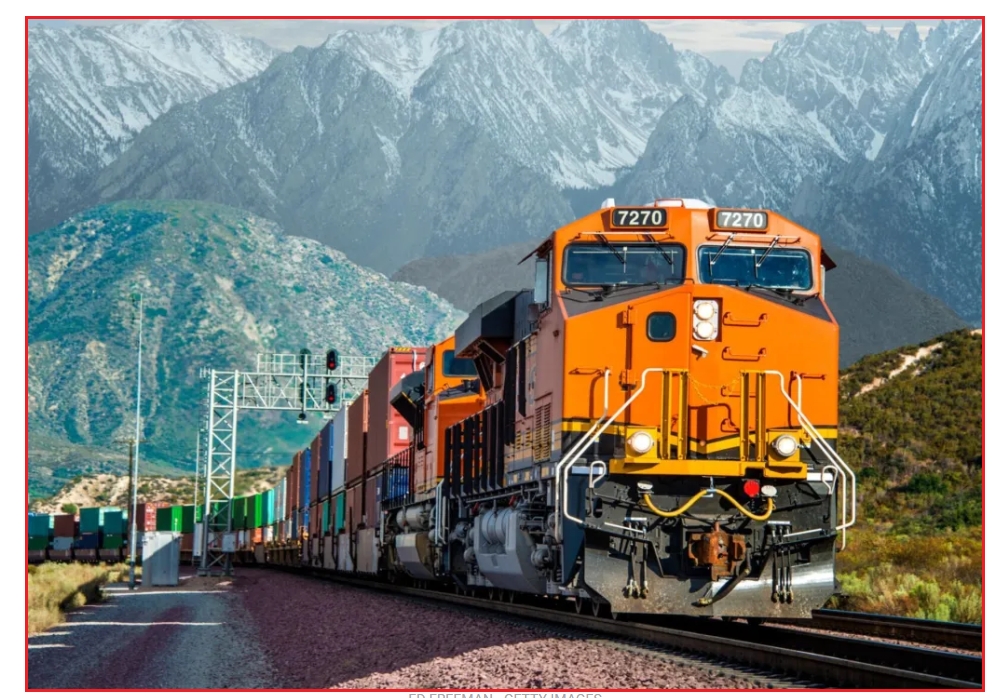
Diesel Trains
Diesel locomotives were first used after World War One. In a diesel locomotive the power comes from the engine and burns diesel oil. The engine doesn't drive the wheels but has an electric motor that turns the wheels. Diesel-powered trains are used world wide because they are powerful and less expensive than other trains.
On your papers in your table groups you need to create notes and write facts togethers about diesel trains.
Your homework for today is to think what our class train's name is.
Here is a videos which might help you out.
Watch - Thomas and friends theme song