Images protected by Greenhouse School Websites
Quick Links

Quick Links Open/Close

Stoneyholme Community Primary School

  • Facebook
  • ParentPay

Wednesday


 To be able to identify and use question marks.

Somebody has deleted all the question marks from these sentences. Can you help by telling your teacher where they are needed?


What are we having for lunch

Is it home time

When are we going to play

Do you know the time please

Please can I go to the toilet

To say, and hold in memory when writing, simple sentences that make sense.

 It is the right of every child to have access to reliable information.

 We have to use our research skills to tell important, true facts.

Your teacher will pause the video after each fact so you can discuss it with your partner.


Watch- Animal Facts - Mouse on Youtube.


Share your fact with the rest of the class and your teacher will model how to write it in a sentence.


It's your turn to write your favourite fact in your book. Remember to use a capital letter and full stop.


To be able to make addition stories using correct vocabulary.

Now it's your turn to complete pages 39-42


How do people change as they grow from being a baby to being a adult?
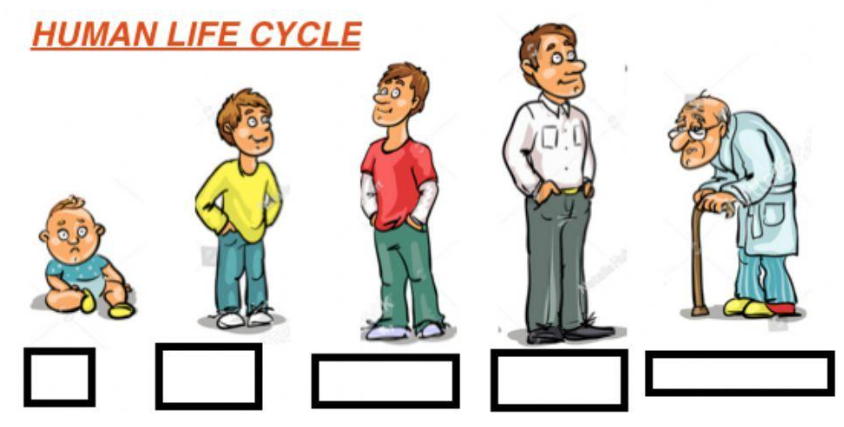
Key vocabulary

baby, toddler, child, teenager, adult, grow, change, older, younger

Starter – Who am I?

  • What can you see?
  • Who is the youngest?
  • Who is the oldest?
  • What is different about them?
  • Do you think they could all do the same things? 
  • We all grow and change as we get older. We start as babies and grow into children and then adults.


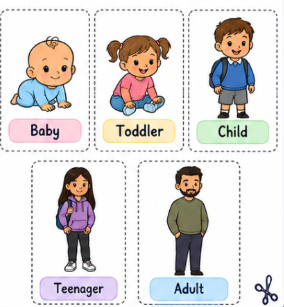
Give children pictures showing the stages of growing:

👶 Baby → Toddler → Child → Teenager → Adult

As a class, talk about what people might be able to do at each stage.

Baby

  • Needs lots of help from adults.
  • Drinks milk/eats baby food.
  • Learns to sit, crawl and walk.

Toddler

  • Learns to talk more.
  • Can walk and run.
  • Starts doing some things independently.

Child

  • Goes to school.
  • Learns to read, write and count.
  • Can do more things independently.

Teenager

  • Gets older and becomes more independent.
  • Body continues to grow and change.

Adult

  • Has an adult body.
  • Can make many of their own choices.
  • Can look after themselves and may look after others.

Important: Explain that everyone grows at their own pace and people can look different at different ages.

Practical Activity – Put Me in Order

Give each pair/group a set of five picture cards showing:

👶 Baby
🧒 Toddler
👦 Child
🧑 Teenager
🧑‍🦱 Adult

Ask them to put the pictures in order from youngest to oldest.

“What changes as we grow?”

Children can share ideas such as:

  • We get taller.
  • We get older.
  • We learn new things.
  • We can do more things by ourselves.
  • Our bodies change.

Activity – What can I do?

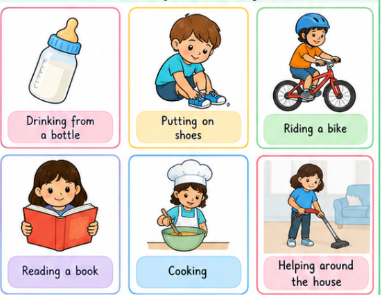
Show pictures of different activities such as:

🍼 Drinking from a bottle
👟 Putting on shoes
🚲 Riding a bike
📚 Reading a book
🍳 Cooking
🧹 Helping around the house

“Who might be able to do this?”

Explain that some things need an adult's help when we are little, but as we grow we learn to do more things independently.

Plenary – Finish the sentence

Sit together and ask children to complete:

“As I grow, I can…”

Possible answers:

  • “do more things by myself.”
  • “learn new things.”
  • “help others.”
  • “become more independent.”
↑